OUR ROASTING PROCESS
FLUID BED ROASTING
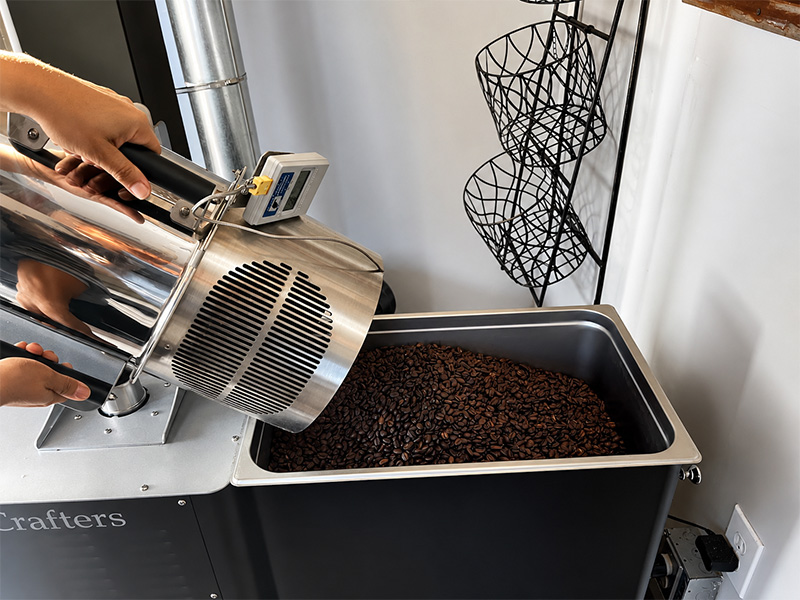
Garden Coffee utilizes a Fluid Bed Roaster to roast all our beans on a bed of hot air. All the acrid smoke associated with roasting is immediately sucked away from the beans, rather than circulating with them. The convection heating process is very quick, and then the beans are cooled rapidly. Rapid cooling locks in the aromatic compounds so the resulting product is clean, crisp, fresh, and flavorful. In a fluid bed roaster, heat and airflow are forced into the chamber from below. This keeps the beans in constant rotation, so they’re not actually roasting on a surface; they’re being roasted by the air and the pressure in the chamber. As hot air flows through the roaster, the force lifts the beans, causing them to float. This effectively means the coffee beans are resting on a “bed” of heated air, which is where the term “fluid bed roasting” comes from.
Why It Produces a Better Cup
Most commercial roasters use a drum roasting method, where beans tumble inside a heated metal cylinder. While effective at scale, drum roasting exposes beans to direct surface contact and recirculating smoke, which can introduce subtle bitter or ashy notes — especially at darker roast levels. Fluid bed roasting eliminates both of those variables entirely. With no contact surface and no smoke recirculation, what you get in the cup is a truer expression of the bean itself — brighter, cleaner, and more nuanced than what most roasting methods can deliver.
High-Quality Specialty Coffee
HONDURAN COFFEE ON THE WORLD STAGE
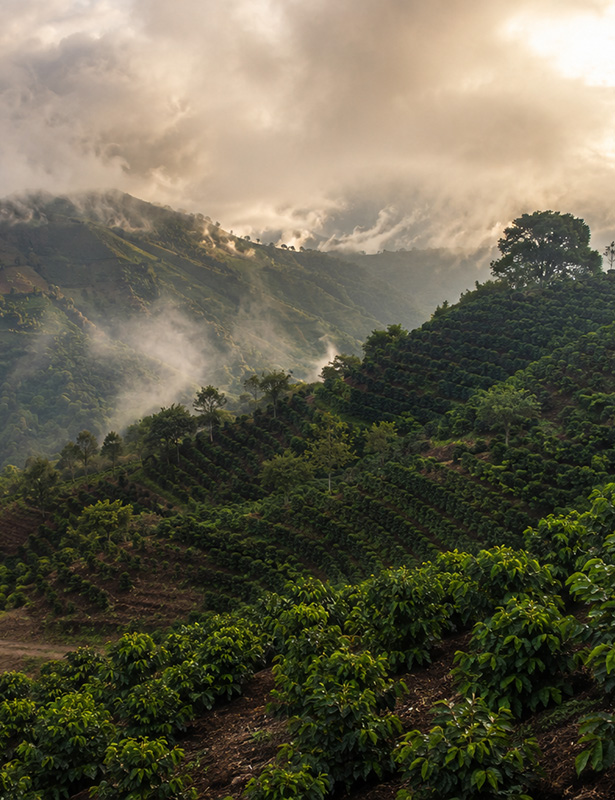
What pushed Honduras to the top of Central American coffee production wasn’t luck — it was geography. The country’s mountainous interior creates the kind of growing conditions that specialty roasters actively seek out: high altitude, rich volcanic soil, and a climate that slows the development of the coffee cherry just enough to concentrate its sugars and complexity. The result is a bean with a naturally balanced profile — mild acidity, medium body, and a sweetness that holds up beautifully across light, medium, and dark roasts.
Get a behind-the-scenes look at life on real coffee-producing farms in Honduras.

AIR ROASTING
Precision Roasting for Every Bean
The air roaster is accurate to one degree Fahrenheit. We target exact temperatures to highlight each bean’s unique flavor profile, which can then be repeated roast after roast. It doesn’t matter if you prefer a light, medium, or dark roast; you will always get a perfect roast profile from our artisan roaster.
That level of precision also means consistency. Every batch is roasted to the same exacting standard, so the bag you order today tastes exactly like the one you loved last month. For specialty-grade beans sourced from small family farms in Honduras, that consistency matters — it honors the quality of the raw product and ensures nothing is lost between the farm and your cup.
ALTITUDE
THE SECRET IS IN THE ALTITUDE
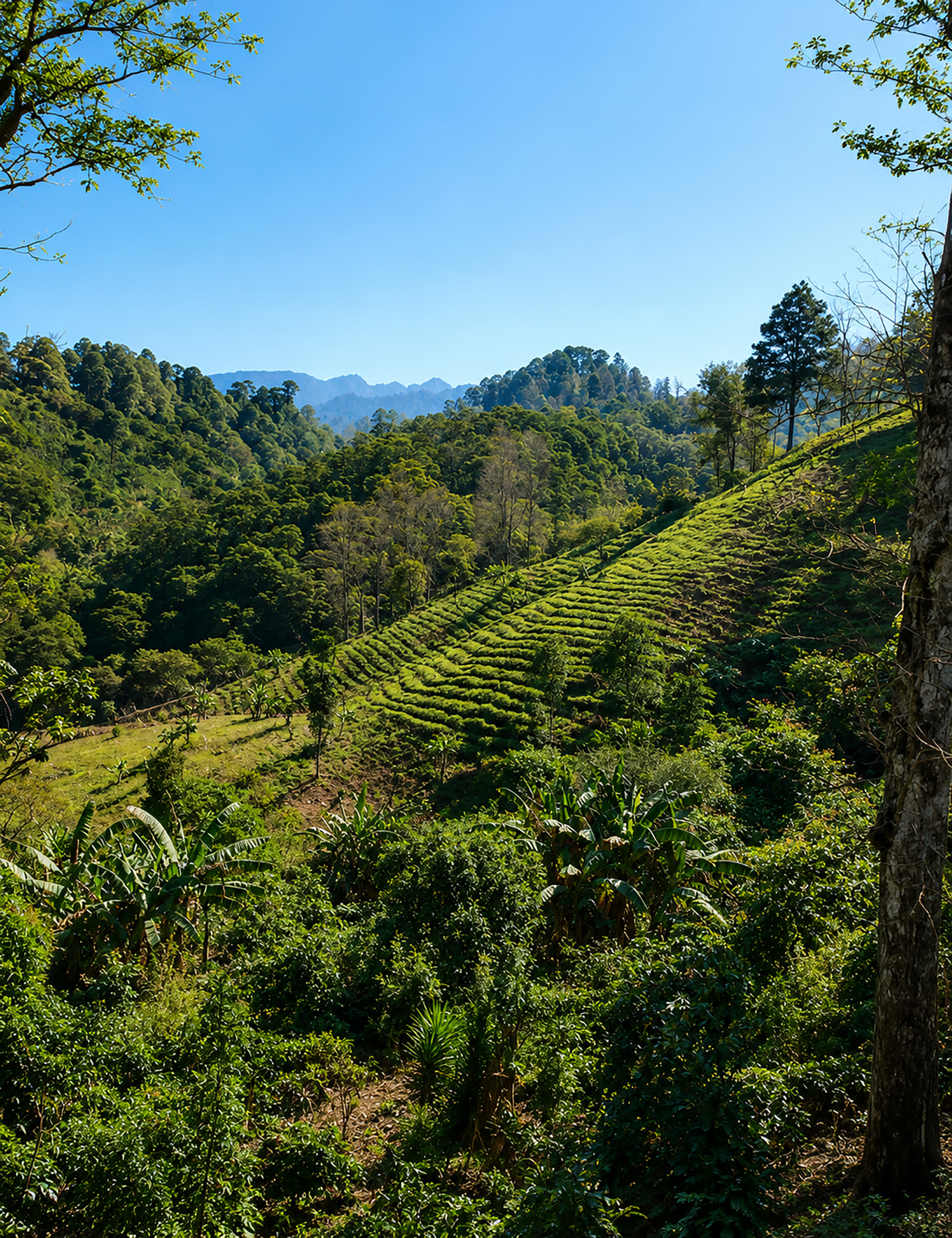
The higher the elevation, the better the coffee. The Honduran government has become increasingly intentional about protecting and promoting its high-altitude growing regions, establishing the “Strictly High Grown” (SHG) designation — also labeled “Strictly Hard Bean” (SHB) — for coffee cultivated at elevations between 4,900 and 6,400 feet. At those heights, cooler temperatures slow the maturation of the coffee cherry significantly, giving the bean more time to develop density, complexity, and natural sweetness.
That slower growth comes at a cost — high-altitude beans take longer to produce and require more careful tending — but the payoff in the cup is undeniable. Denser beans roast more evenly, hold their flavor longer after roasting, and respond beautifully to the precision temperature control that our fluid bed roaster delivers. Pair that with Honduras’s rich volcanic soils, which provide exceptional mineral content and natural drainage, and you have a growing environment that practically does half the work for us.
It’s no coincidence that the farms Garden Coffee partners with in Honduras sit squarely within SHG elevation ranges. That’s not a marketing detail — it’s the foundation of everything that ends up in your bag.